Tuesday, May 21, 2013

Thursday, May 16, 2013
Monday, January 21, 2013
United States Tornadoes of 2012
*Updated Jan. 6, 2013 and subject to revision.
Comparisons are made for the 62-year period 1950-2011 unless otherwise noted. The official NOAA/NWS period of record for tornadoes in the United States extends back to 1950. Fatality records for significant tornado events prior to 1950 are used for historical comparison. Tornado numbers from January through October, 2012 are derived from
Storm Data while numbers for November through December are preliminary estimates based on NWS Public Statements and Local Storm Reports.
First Tornado.....................................8:45 AM CST, 9-Jan (EF0-TX)
Last Tornado......................................5:00 PM EST, 26-Dec (EF1-NC)
2012 Total Tornadoes..............................936 (Ranked 25th since 1950)
Record Annual Total..............................1817 in 2004
Greatest 2012 Monthly Total........................206 in April
Greatest Monthly Total on Record...................759 in April 2011
2012 Tornado Days..................................170
Annual Average.....................................178 (50-years, 1962-2011)
Record Tornado Days in Any Year....................211 in 2000
Greatest 2012 Daily Total (Mid-Mid CST).............86 on 14-Apr
Greatest Daily Total on Record.....................200 on 27-Apr-2011
States Reporting Tornadoes in 2012..................46
Annual Average Number of States.....................43 (50-years, 1962-2011)
Most States Reporting Tornadoes in Any Year.........48 (2011 and 1989)
2012 Tornado Deaths.................................68 (Ranked 25th since 1950)
Annual Average Tornado Deaths.......................91 (62-years, 1950-2011)
2011 Tornado Deaths................................553 (Ranked 2nd in History)
Greatest Annual Number of Tornado Deaths...........794 (1925)
2012 Tornado Injuries..............................829 (Ranked 43rd since 1950)
Greatest Annual Number of Injuries................6824 in 1974
2012 Deadliest Single Tornado.......................Henryville, IN (11, 2-Mar)
Record Deadliest Single Tornado (modern era)........Joplin, MO, 158, 22-May-2011
2012 Longest Track..................................85 miles (KY-WV, 2-Mar)
Record Longest Track...............................235 miles (LA-MS, 22-Mar-1953)
2012 Tornadoes Rated EF4.............................4 (Fewest since 2 in 2009)
Record Annual Number................................36 in 1974
2012 Tornadoes Rated EF5 (200+mph)...................0 (Fewest since 0 in 2010)
Record Annual Number of EF5 Tornadoes................7 in 1974
2012 Estimated Property and Crop Losses...........~1.6 billion USD
2011 Estimated Property and Crop Losses..........~10.0 billion USD (Ranked 1st)
Greatest Losses from Single Tornado...............~2.8 billion USD (Joplin, MO)
Statistics compiled by Gregory.Carbin.at.noaa.gov, NOAA/NWS/Storm Prediction Center,
www.spc.
Dramatic tornado survival story
Reporter: Paige Quiggins


In the small town of West Liberty, one four legged family member was the talk of the town.
Veterinarians and his owner said they have never seen anything like it and have no explanation for the outcome other than equine divine intervention.
“After what we went through every day is a blessing to us,” said David Green.
Green and his family look upon their land in Morgan County with hope after devastation.
“A tornado or nothing else is going to keep us from living here,” Green said.
He and his family are rebuilding their homes after the Mar. 2 tornado. They said their extended family would be included when they came back.
“He is my horse and I love him,” said 8-year-old Colten Conley, a grandson of Green’s.
“We think of them of them as family and we don't want any harm to come to them,” said Green.
After a tornado destroyed David and Barbara Green’s home, the walls were left still standing...
“I didn’t think we were going to survive the tornado,” said Green.”
“Then, after it was over, I had went to the front door to try to get us out of the home because I was afraid a wall would cave in on us or something and my wife said look, there's a horse in the kitchen! I said now is not the time to be joking around.”
Their gelding, “Chief,” had been picked up by the twister and placed in the kitchen.
The family and the vet said that after all the devastation they went through they believe there is a reason why a story like this came to be.
“I think that is where the Lord wanted him put,” said Dr. David Fugate of West Liberty Veterinary Clinic.
“I think the Lord is why myself and my wife are still alive and weren't injured in the tornado also,” said Green.
Some called it a miracle.
“He was not dropped, he had to have been eased onto the floor of that kitchen,” said Fugate.
Fugate said he never expected to see anything like it.
“I can't explain how the wind and the force and the wind can pick up a 1,100 pound horse and set it inside a house without breaking one of its limbs, a fracture or a terrible laceration except the good Lord wanted it that way,” said Fugate.
They said “Chief,” also known as “Twister,” helped them on the road to recovery.
“He is lucky to be alive,” said Conley.
Fugate said the story was uplifting and he enjoyed telling the Palamino's story to others.
“It’s one of the good ones,” said Fugate.
“He has been kind of a source of inspiration for me.”
The family said they hope to ride “Chief” again one day
Thursday, January 17, 2013
Tuesday, January 8, 2013
How a Tornado saved Washington, D.C. during the War of 1812
Notes from a Veteran
News and information at The Veterans Site
by Dan Doyle, Vietnam Veteran
 Sometimes strange, unaccountable things happen, and because
of them, the course of history is changed. This is the story of a natural
disaster that helped stop a potential tragedy that would certainly have changed
the course of history in ways that we don't even want to think of, certainly not
as Americans.
Sometimes strange, unaccountable things happen, and because
of them, the course of history is changed. This is the story of a natural
disaster that helped stop a potential tragedy that would certainly have changed
the course of history in ways that we don't even want to think of, certainly not
as Americans.
The time was August 24, 1814. The place was Washington, D.C. and it was the second year of an on again-off again war between the young American democracy and its old nemesis, Britain. This second war with Britain began in 1812 as the result of Britain's failure to honor its treaty obligations from the end of the Revolutionary War, where they had agreed to give up certain western territories in the Americas, along with the original thirteen colonies. They had not yet done so. They were also engaging in naval terrorism by taking some American merchant ships and illegally conscripting their crews to fight on British ships. The British had recently defeated Napoleon at the Battle of Trafalgar and were now able to send more battle seasoned troops to do battle with the upstart Americans.
Previously, the war had been a series of minor engagements. In 1814 the British sailed up Chesapeake Bay with a large naval fleet and marines to attack Baltimore and Washington, D.C. To the south, British forces proceeded to Blandensburg, Maryland where they overwhelmed the American volunteers. This left the route to Washington, D.C. wide open. President James Madison was present at the battle to witness the U.S. military in combat. He retreated to Virginia, just outside of the Capitol. His wife, Dolly Madison, supervised the abandonment of the White House, saving everyone, as well as Gilbert's famous full length portrait of George Washington in the process.
August 24, 1814 was one of those very hot, humid, dog-days of late summer that are still quite common in D.C. today. The temperature hovered around 100 degrees when the British forces entered the city. Off in the distance, the skies were growing angry and dark with an impending thunder storm.
British forces found the White House dining room set for a formal dinner and sat down to devour the hastily abandoned meal themselves. After sating their hunger they proceeded to set fire to the White House. British troops also set fire to the then unfinished Capitol Building, and several other government edifices, as well as some military targets. While they were engaged in these efforts, the force and power of a violent thunderstorm rushed down upon the city with its terrible thunder, lightning, and torrential rains. This was a particularly fierce storm, more mean than the common thunderstorms of August.
Then a monstrous tornado descended suddenly from the tumultuous skies. It is said that it was one of the most destructive tornado events in history up to that time. Some say it may have actually been two tornados. The raging funnel tore through the city. It ripped huge trees up by their roots tumbling them across roads. It lifted entire buildings off of their foundations and set them down yards away. It also tossed some of the British heavy cannons up into the air like tin toys. One officer, who refused to dismount his horse, was unceremoniously, along with his horse, lifted up and violently dashed to the ground. It is said that more British soldiers were killed that day by that storm than by the American military forces. The rains that came with the storm were so heavy that they doused the flames that the British had set in many of the Capitol buildings.
The British had hoped that the destruction of the Capitol would demoralize the Americans. Instead, the American populace was outraged and thousands of men volunteered to help defend Baltimore against the further British invasion efforts. The Americans successfully repelled every British attack for the remainder of the war.
The final battle of that war took place near New Orleans on January 8, 1815. There, General Andrew "Stonewall" Jackson led a ragtag force of some 4,000 volunteers against some 8-9,000, well-trained British troops under the command of Sir Alexander Cochrane. At the end of the battle, the Americans reported the loss of 13 killed, 58 wounded, and 30 captured. For the British, the losses were far greater. They reported 291 killed, 1,262 wounded, and 484 captured/missing. It was the most one-sided land victory of the war.
I believe we have to be reminded of our history now and then. America came close to losing everything it holds dear on that August day in 1814. Though Mother Nature was involved, it was the indomitable American love of freedom and the voluntary, willing sacrifice of everyday Americans serving in the military that would eventually save the nation once again. This is the same spirit that our fighting men and women live out of today. We have always risen to the challenge in the past. We must always be ready to do so, now, and in the future.
News and information at The Veterans Site

How a Tornado saved Washington, D.C. during the War
of 1812
by Dan Doyle, Vietnam Veteran
Sometimes strange, unaccountable things happen, and because
of them, the course of history is changed. This is the story of a natural
disaster that helped stop a potential tragedy that would certainly have changed
the course of history in ways that we don't even want to think of, certainly not
as Americans. The time was August 24, 1814. The place was Washington, D.C. and it was the second year of an on again-off again war between the young American democracy and its old nemesis, Britain. This second war with Britain began in 1812 as the result of Britain's failure to honor its treaty obligations from the end of the Revolutionary War, where they had agreed to give up certain western territories in the Americas, along with the original thirteen colonies. They had not yet done so. They were also engaging in naval terrorism by taking some American merchant ships and illegally conscripting their crews to fight on British ships. The British had recently defeated Napoleon at the Battle of Trafalgar and were now able to send more battle seasoned troops to do battle with the upstart Americans.
Previously, the war had been a series of minor engagements. In 1814 the British sailed up Chesapeake Bay with a large naval fleet and marines to attack Baltimore and Washington, D.C. To the south, British forces proceeded to Blandensburg, Maryland where they overwhelmed the American volunteers. This left the route to Washington, D.C. wide open. President James Madison was present at the battle to witness the U.S. military in combat. He retreated to Virginia, just outside of the Capitol. His wife, Dolly Madison, supervised the abandonment of the White House, saving everyone, as well as Gilbert's famous full length portrait of George Washington in the process.
August 24, 1814 was one of those very hot, humid, dog-days of late summer that are still quite common in D.C. today. The temperature hovered around 100 degrees when the British forces entered the city. Off in the distance, the skies were growing angry and dark with an impending thunder storm.
British forces found the White House dining room set for a formal dinner and sat down to devour the hastily abandoned meal themselves. After sating their hunger they proceeded to set fire to the White House. British troops also set fire to the then unfinished Capitol Building, and several other government edifices, as well as some military targets. While they were engaged in these efforts, the force and power of a violent thunderstorm rushed down upon the city with its terrible thunder, lightning, and torrential rains. This was a particularly fierce storm, more mean than the common thunderstorms of August.
Then a monstrous tornado descended suddenly from the tumultuous skies. It is said that it was one of the most destructive tornado events in history up to that time. Some say it may have actually been two tornados. The raging funnel tore through the city. It ripped huge trees up by their roots tumbling them across roads. It lifted entire buildings off of their foundations and set them down yards away. It also tossed some of the British heavy cannons up into the air like tin toys. One officer, who refused to dismount his horse, was unceremoniously, along with his horse, lifted up and violently dashed to the ground. It is said that more British soldiers were killed that day by that storm than by the American military forces. The rains that came with the storm were so heavy that they doused the flames that the British had set in many of the Capitol buildings.
The British had hoped that the destruction of the Capitol would demoralize the Americans. Instead, the American populace was outraged and thousands of men volunteered to help defend Baltimore against the further British invasion efforts. The Americans successfully repelled every British attack for the remainder of the war.
The final battle of that war took place near New Orleans on January 8, 1815. There, General Andrew "Stonewall" Jackson led a ragtag force of some 4,000 volunteers against some 8-9,000, well-trained British troops under the command of Sir Alexander Cochrane. At the end of the battle, the Americans reported the loss of 13 killed, 58 wounded, and 30 captured. For the British, the losses were far greater. They reported 291 killed, 1,262 wounded, and 484 captured/missing. It was the most one-sided land victory of the war.
I believe we have to be reminded of our history now and then. America came close to losing everything it holds dear on that August day in 1814. Though Mother Nature was involved, it was the indomitable American love of freedom and the voluntary, willing sacrifice of everyday Americans serving in the military that would eventually save the nation once again. This is the same spirit that our fighting men and women live out of today. We have always risen to the challenge in the past. We must always be ready to do so, now, and in the future.
Thursday, January 3, 2013
Friday, December 28, 2012
Public Storm Shelter Being Closed
MIDWEST CITY — Public storm shelters in Midwest City will be closed when a resolution takes effect Jan. 1.
Members of the city council voted Dec. 11 to close the shelters. Midwest City's public storm shelters are located in the lower floor of the Reed Conference Center, the basement of city hall and in the basement of Fire Station No. 5.
Officials cited concern for public safety as the reason for the closures. Emergency Management Director Mike Bower said traveling to a public storm shelter immediately before or during a severe weather event exposes people to the hazards they are attempting to avoid.
“Sheltering in place affords our citizens the quickest and best protection during a tornado event,” Bower said.
City spokeswoman Kay Hunt said there has been a high demand for the shelters in recent years.
“They were well-used and used beyond capacity,” Hunt said. “Our policy had been not to open the shelters until the sirens blew, but in the past people would begin showing up as soon as there was talk about severe weather on TV.”
Edmond Public Schools decided this year against allowing people to use its buildings as shelters. During a May 24 tornado, about 8,000 people were allowed into school buildings.
Tuttle has gone the other way. Its new city hall that opened this year has a storm shelter in the basement that can accommodate 985 people.
Midwest City officials said building a shelter that would accommodate a large portion of the city's population would not be cost-effective. They said better options are for people to build shelters in their homes and develop a family plan for weather emergencies.
Members of the city council voted Dec. 11 to close the shelters. Midwest City's public storm shelters are located in the lower floor of the Reed Conference Center, the basement of city hall and in the basement of Fire Station No. 5.
“Sheltering in place affords our citizens the quickest and best protection during a tornado event,” Bower said.
City spokeswoman Kay Hunt said there has been a high demand for the shelters in recent years.
“They were well-used and used beyond capacity,” Hunt said. “Our policy had been not to open the shelters until the sirens blew, but in the past people would begin showing up as soon as there was talk about severe weather on TV.”
Edmond Public Schools decided this year against allowing people to use its buildings as shelters. During a May 24 tornado, about 8,000 people were allowed into school buildings.
Tuttle has gone the other way. Its new city hall that opened this year has a storm shelter in the basement that can accommodate 985 people.
Midwest City officials said building a shelter that would accommodate a large portion of the city's population would not be cost-effective. They said better options are for people to build shelters in their homes and develop a family plan for weather emergencies.
Monday, October 15, 2012
Tornadoes Second Season
By Peter N. Spotts, Staff writer of The Christian Science Monitor / November 12, 2002
Residents across a huge swath of the South and Midwest are beginning the arduous task of picking up their lives after a bizarre coil of autumn tornadoes ripped across the region, wreaking some of the worst damage in decades. The cluster of storms left dozens dead and hundreds of others missing across at least 13 states. The devastation is raising enduring questions about the effectiveness of local early-warning systems – and is a painful reminder that tornadoes don't just strike in the spring. There's also an often-overlooked second storm season in the fall.
Preparedness, particularly at a time of year that many people don't associate with tornadoes, remains key, according to Daniel McCarthy, warning- coordination meteorologist at the National Weather Service's Storm Prediction Center in Norman, Okla.
"Every year we get an outbreak of some kind in November," typically from the Tennessee Valley to the Southeastern US, says Daniel McCarthy. It's a region that in the past few years has become known as "Dixie Alley."
People in that area "have to be prepared; they need to know where to go for safety," and be as alert to the possibility of fall tornadoes as residents of "Tornado Alley" – the storm-prone Midwest and middle South, from Texas north to Nebraska and Iowa – are to storms in the spring, Mr. McCarthy says.
The number of twisters and the reasons for the high death toll – which at press time stood at 33, with more than 100 injured – may not emerge for a few days. Meteorologists will be reviewing weather-radar data and reports from human "spotters," while local emergency-management officials look at the types and ages of damaged structures.
But they do have a clear idea of the unusual conditions that spawned the storms. A strong storm front running from the Mississippi Valley to the southern plains was moving east. Drawing energy from the warm, moist air that the system was pulling north from the Gulf of Mexico, the storm front intensified as it moved into the Ohio Valley, according to McCarthy. Jet-stream winds at 18,000 feet were clipping along at 110 miles an hour along a line from Arkansas to western New York, while 13,000 feet below, more southerly winds blew at a respectable 62 miles an hour.
Those conditions, dubbed vertical shear, "were the strongest we've seen in many years," McCarthy says. Like a pair of hands rolling Play-Doh, high winds running in different directions at two altitudes set up a broad rolling motion in the layers of air in between that translated into the worst tornadoes since May 1999, when a series of twisters tore through parts of Oklahoma and Kansas, killing 40 people and inflicting $1.2 billion in damage.
Though fall tornadoes are rare in the Midwest, they're not unheard of, according to the National Weather Service, and the Great Lakes' warmth makes weather less predictable. In Ohio, the tornado drew comparisons to a 1999 spring storm in Cincinnati and 1985 twisters that killed 10 and injured 250.
The storms blew in on the tail of Sunday's record highs: Nashville's balmy 81-degree afternoon broke a century-old record.
Typically, Dixie Alley's tornado season runs from the first of October to mid-November. "The abnormality of this particular outbreak was how far north it carried, into Indiana and northwest Ohio," McCarthy says. "Usually second-season tornadoes concentrate no farther north than Tennessee, and mostly in Mississippi and Alabama."
Indeed, during the past few years, the country's second tornado season appears to have intensified. "We started to see it in the late 80s. Northern Alabama had tornado outbreaks on Nov. 15 for three straight years," McCarthy says.
• Material from wire services was used in this report
Preparedness, particularly at a time of year that many people don't associate with tornadoes, remains key, according to Daniel McCarthy, warning- coordination meteorologist at the National Weather Service's Storm Prediction Center in Norman, Okla.
"Every year we get an outbreak of some kind in November," typically from the Tennessee Valley to the Southeastern US, says Daniel McCarthy. It's a region that in the past few years has become known as "Dixie Alley."
People in that area "have to be prepared; they need to know where to go for safety," and be as alert to the possibility of fall tornadoes as residents of "Tornado Alley" – the storm-prone Midwest and middle South, from Texas north to Nebraska and Iowa – are to storms in the spring, Mr. McCarthy says.
The number of twisters and the reasons for the high death toll – which at press time stood at 33, with more than 100 injured – may not emerge for a few days. Meteorologists will be reviewing weather-radar data and reports from human "spotters," while local emergency-management officials look at the types and ages of damaged structures.
But they do have a clear idea of the unusual conditions that spawned the storms. A strong storm front running from the Mississippi Valley to the southern plains was moving east. Drawing energy from the warm, moist air that the system was pulling north from the Gulf of Mexico, the storm front intensified as it moved into the Ohio Valley, according to McCarthy. Jet-stream winds at 18,000 feet were clipping along at 110 miles an hour along a line from Arkansas to western New York, while 13,000 feet below, more southerly winds blew at a respectable 62 miles an hour.
Those conditions, dubbed vertical shear, "were the strongest we've seen in many years," McCarthy says. Like a pair of hands rolling Play-Doh, high winds running in different directions at two altitudes set up a broad rolling motion in the layers of air in between that translated into the worst tornadoes since May 1999, when a series of twisters tore through parts of Oklahoma and Kansas, killing 40 people and inflicting $1.2 billion in damage.
Though fall tornadoes are rare in the Midwest, they're not unheard of, according to the National Weather Service, and the Great Lakes' warmth makes weather less predictable. In Ohio, the tornado drew comparisons to a 1999 spring storm in Cincinnati and 1985 twisters that killed 10 and injured 250.
The storms blew in on the tail of Sunday's record highs: Nashville's balmy 81-degree afternoon broke a century-old record.
Typically, Dixie Alley's tornado season runs from the first of October to mid-November. "The abnormality of this particular outbreak was how far north it carried, into Indiana and northwest Ohio," McCarthy says. "Usually second-season tornadoes concentrate no farther north than Tennessee, and mostly in Mississippi and Alabama."
Indeed, during the past few years, the country's second tornado season appears to have intensified. "We started to see it in the late 80s. Northern Alabama had tornado outbreaks on Nov. 15 for three straight years," McCarthy says.
• Material from wire services was used in this report
Friday, October 5, 2012
School Safety and Childrens Survival Kits
School Safety
 You may have your emergency preparedness supplies at home, but what if something happens when your child is at school? Is the school prepared for situations that pose imminent danger to your child, like an active gunman or a natural disaster? What if the school must stay in a lockdown situation for an extended period of time? Such incidents are not common, but as with any other emergency, it is important to be prepared for them.
What Parents Can Do
Parents can ask to review the emergency procedures of their child’s school—many school districts have made these procedures available online. Parents can also emphasize the importance of following these procedures to their children and paying attention during lockdown drills.
What Teachers and Administrators Can Do
Prepare and practice emergency procedures. Though incidents that require lockdown are rare and the nature of each one is different, having an action plan can make a difference in lives saved. Provide training in lockdown procedures to faculty members and have lockdown drills periodically. Establish clear routes for communication, which is key in any emergency situation.
Provide emergency supplies for each classroom. At the very least, a first aid kit should be supplied. The Guardian Classroom Lockdown Kit includes everything a class of 30 would need to survive a 72-hour emergency. In Stillwater, Oklahoma on September 26, 2012, an eighth-grade student at Stillwater Junior High took his own life with a shotgun. The student was the only one harmed, but until the nature of the situation was determined, the school was in lockdown for four hours. In this and other situations, students and teachers would benefit from the extra food, water, and sanitation supplies provided in one of Guardian’s survival kits sold through Providence Safe Rooms.com.
School emergency preparedness is a team effort, and with procedures, practice, and emergency supplies, many lives can be saved.
photo credit: <a href=”http://www.flickr.com/photos/ajari/3896236143/”>ajari</a> via <a href=”http://photopin.com”>photopin</a> <a href=”http://creativecommons.org/licenses/by/2.0/”>cc</a>www.ProvidenceSafeRooms.comwww.ProvidenceSafeRooms.com
Thursday, October 4, 2012
Hunters Survival Kit
PRICED: Today’s Special $ 89.00 plus s/h
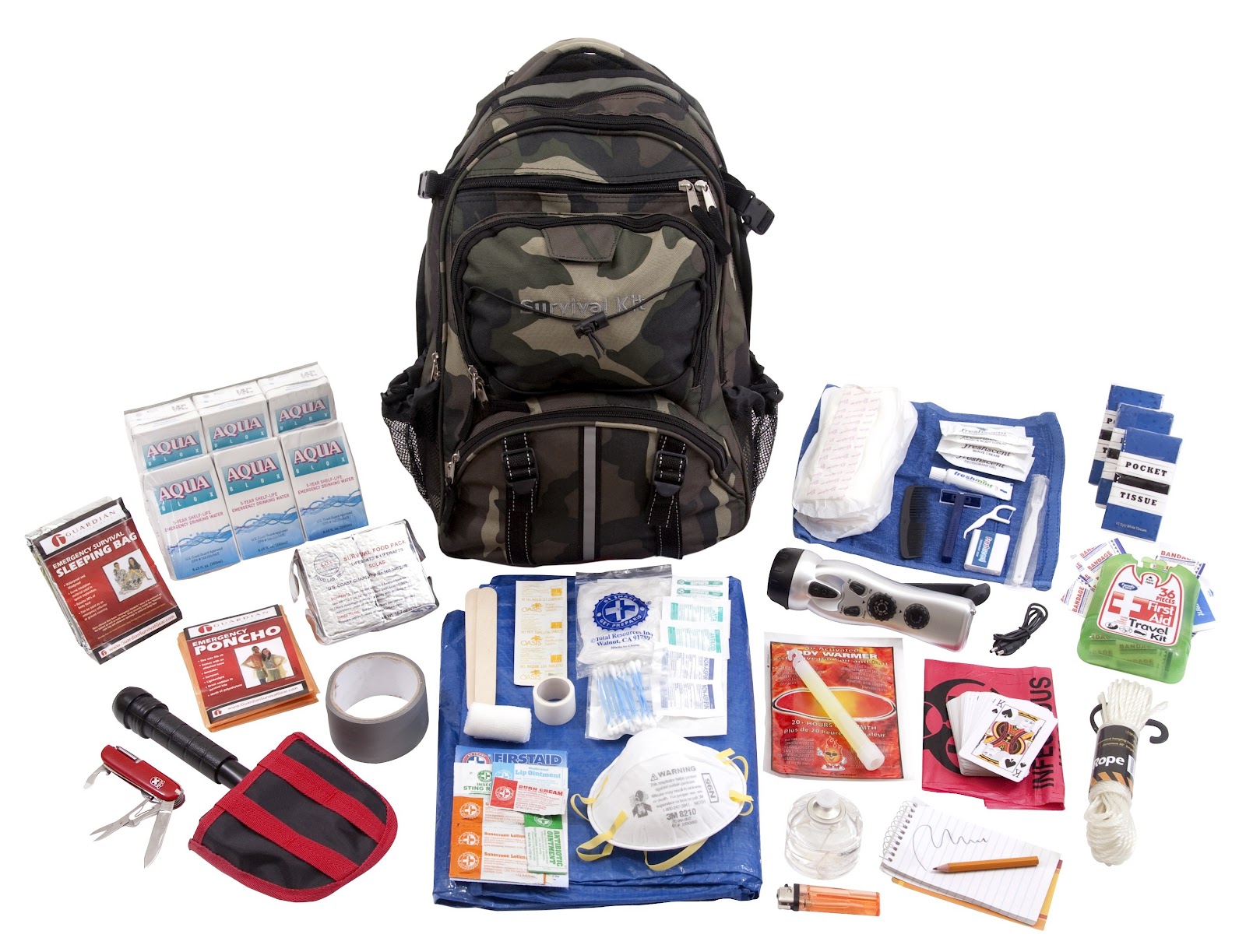
All items are
packed securely in our Deluxe Camo Backpack which contains extra space available for your personal items, a Bright
Orange Pull-Out Flag when necessary, and gun straps to free your hands as you
travel
This kit contains the following:
This kit contains the following:
6 Boxes of Aqua Blox Water Boxes
6 - 400 Calorie Food Bars (2400 Calories)
10 Water Purification Tablets - each tablet purifies 1 liter of water
Light and Communications: In the event of a power outage caused by you’ll have independent access to your own means of lighting and communication with the outside world.
Dynamo 4-in-1 Flashlight (Flashlight, Radio, Siren, Charger)
30 Hour Emergency Candle
12 Hour Green Emergency Glow Stick
Box of Waterproof Matches
Shelter and Warmth: These supplies will provide protection from outside weather forces. They will protect you from wind, sun, rain, and many other conditions you may encounter.
Emergency Survival Sleeping Bag
16-20 Hour Body Warmer
Orange Poncho with Hood
Tools: These items are designed to be useful in disaster situations. They will be a valuable resource when you find yourself faced with navigation, transport, personal protection, or shelter troubles.
N95 NIOSH Dust Mask
Roll of Duct Tape
50 ft. of Nylon Rope
16 Function Swiss Army Style Knife
6' x 8' Blue Tarp
Waste Bag
Multi-Function Shovel (nail puller, hatchet edge, saw edge, hammer, wrench with 3 different sizes, a bottle opener, a water filled compass, a waterproof container. Inside the waterproof container you will find a box of matches, 2 nails, a sharp razor blade, fishing line, bobbers, and hooks)
Hygiene and Sanitation: When in a disaster situation it is useful to have access to hygiene products. Staying clean can protect against infection, disease, and depression.
24 Piece Deluxe Hygiene Kit
3 Pocket Tissue Packs
First Aid: These first aid items can assist with minor injuries and protect against serious health concerns in disaster circumstances.
Guardian 65 Piece Deluxe First Aid Kit
Other: These items are useful for stress relief and activity in strenuous or challenging circumstances.
Deck of Standard Playing Cards
Note Pad
Pencil
Emergency Survival Kit Information:
This survival kit was designed using advice from experts in the emergency preparedness and hunting industry. It follows guidelines given by government agencies and non-profit preparedness organizations. This deluxe hunters’ survival kit has a retail value of $120.
www.ProvidenceSafeRooms.com
Wednesday, October 3, 2012


Price $ 3.99 ea

October Tornadoes
Two weak tornadoes touched down in Tennessee on Monday, October 1. It's a reminder that autumn is considered the "second" tornado season.
According to Tornado Expert Dr. Greg Forbes, the second half of October and November can be ripe for severe storms and tornadoes.
 (More: Storm Watch | Tornado Safety)
The National Weather Service confirmed an EF-0 tornado touched down near Grant in Smith County, Tenn. Monday, Oct. 1. Another EF-0 touched down in Statesville in Wilson County, Tenn. on the same day. They were part of a system that drenched much of the South on Monday.
The storms downed multiple trees, ripped siding off homes, and overturned lawn sheds. There were no reports of injuries.
Other Monday Tornadoes
 "With 7 preliminary tornadoes on Oct, 1 2012 the question is whether this will be the second month in a row with the most tornadoes on the first day," says Dr. Forbes. "September 1, 2012 was the most active day last month. Most of those tornadoes were from the remnants of Hurricane Isaac."
While most of the largest tornado outbreaks still occur in spring, autumn has its share of storms as well. Dr. Forbes examined the storm statistics from 1967-2012 and found 6 of the 50 largest outbreaks occurred in October and November.
Most of September's tornado outbreaks are due to landfalling tropical systems. October and November's tornadoes are caused by strong cold fronts and lwo pressure systems affecting the South and sometimes the Midwest.
According to Tornado Expert Dr. Greg Forbes, the second half of October and November can be ripe for severe storms and tornadoes.
September's Tornado Tally
"In many ways, this is the counterpart to spring, when strong fronts and upper air systems march across the United States," says Dr. Forbes. "When enough warm, moist air accompanies these weather systems, the unstable conditions yield severe thunderstorms and sometimes tornadoes."
The National Weather Service confirmed an EF-0 tornado touched down near Grant in Smith County, Tenn. Monday, Oct. 1. Another EF-0 touched down in Statesville in Wilson County, Tenn. on the same day. They were part of a system that drenched much of the South on Monday.
The storms downed multiple trees, ripped siding off homes, and overturned lawn sheds. There were no reports of injuries.
Other Monday Tornadoes
- North Carolina: 3 confirmed EF-0 tornadoes
- Alabama: 1 confirmed EF-0 tornado
- South Carolina: 1 preliminary tornado report
Average Monthly Tornadoes
While most of the largest tornado outbreaks still occur in spring, autumn has its share of storms as well. Dr. Forbes examined the storm statistics from 1967-2012 and found 6 of the 50 largest outbreaks occurred in October and November.
Most of September's tornado outbreaks are due to landfalling tropical systems. October and November's tornadoes are caused by strong cold fronts and lwo pressure systems affecting the South and sometimes the Midwest.
Don't Be Caught Unprepared

Never be stranded without these essential items in the trunk of your car. All of the items in this Auto Kit are packaged safely in our durable auto bag that includes a foldable floor mat.
This kit contains the following:
Light and Communications: In the event of a power outage caused by you’ll have independent access to your own means of lighting and communication with the outside world.
Rechargeable Squeeze Flashlight
Shelter and Warmth: These supplies will provide protection from outside weather forces. They will protect you from wind, sun, rain, and many other conditions you may encounter.
Rechargeable Squeeze Flashlight
Emergency Survival Blanket
Full Body Warmer
Emergency Poncho with Hood
Tools: These items are designed to be useful in disaster situations. They will be a valuable resource when you find yourself faced with navigation, transport, personal protection, or shelter troubles.
Tow Rope - 10 ft.
Car Battery Jumper Cables
Reflective Triangle
Tire Puncture Seal
Oil Funnel
First Aid: These first aid items can assist with minor injuries and protect against serious health concerns in disaster circumstances.
37 Piece Pocket First Aid Kit
Order through Providence Safe Rooms, Inc. 855-758-8038 http://www.ProvidenceSafeRooms.com
Food Storage Survival Kits Available
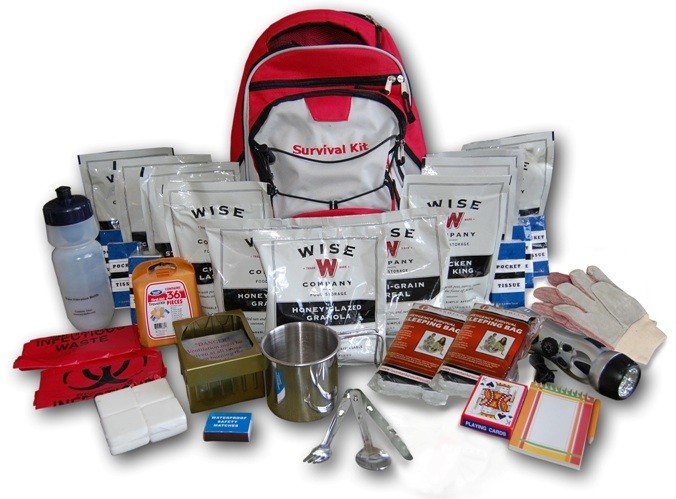
This kit contains the following:
Food and Water: The food and water in this kit will comfortably provide you with adequate nutrition for 72-hours without access to additional supplies. These products have a 5 year shelf life.
11 Cook in the Pouch Meals with a total of 44 meals:
• 28 - Lunch/Dinner Servings
o Stroganoff - 4 Servings (1 Pouch)
o Creamy Chicken Pasty - 4 Servings (1 Pouch)
o Cheesy Lasagna - 4 Servings (1 Pouch)
o Chicken Teriyaki - 4 Servings (1 Pouch)
o Chicken Ala King - 4 Servings (1 Pouch)
o Southwest Bean & Rice (1 Pouch)
o Beef Teriyaki - 4 Servings (1 Pouch)
• 16 - Breakfast Servings
o Honey Glazed Granola - 8 Servings (2 Pouches)
o Multi-Grain Cereal - 4 Servings (1 Pouch)
o Brown Sugar Oatmeal - 4 Servings (1 Pouch)
24 oz. Water Filtration bottle
Light and Communications:In the event of a power outage caused by you’ll have independent access to your own means of lighting and communication with the outside world.
Dynamo 4-in-1 Radio Flashlight
Waterproof Matches
Shelter and Warmth:These supplies will provide protection from outside weather forces. They will protect you from wind, sun, rain, and many other conditions you may encounter.
2 Mylar Emergency Sleeping Bags
Tools:These items are designed to be useful in disaster situations. They will be a valuable resource when you find yourself faced with navigation, transport, personal protection, or shelter troubles.
Portable Cooking Stove (includes 8 Fuel Tablets)
Steel Fork, Knife, & Spoon Chow Kit
16 oz Steel Cup
Pair of Leather Palm Work Gloves
2 Infectious Waste Bags
Hygiene and Sanitation: When in a disaster situation it is useful to have access to hygiene products. Staying clean can protect against infection, disease, and depression.
3 Packs of Pocket Tissues
First Aid: These first aid items can assist with minor injuries and protect against serious health concerns in disaster circumstances.
37 Piece Pocket First Aid Kit
Other: These items are useful for stress relief and activity in strenuous or challenging circumstances.
Deck of Standard Playing Cards
Note Pad
Golf Pencil
Emergency Survival Kit Information:
This Long Term Food Storage Essentials Survival Kit was designed using advice from experts in the emergency preparedness industry. It follows guidelines given by government agencies and non-profit preparedness organizations. This survival kit has a retail value of $250 but you can order now through Providence Safe Rooms for $170.00 with Free Shipping Preparedness is Keywww.ProvidenceSafeRooms.com
Friday, August 17, 2012
Tuesday, August 7, 2012
Monday, August 6, 2012
Be Prepared
Tornado Storm Shelters

What kinds of storm shelters are there?
Three main types of shelters are designed to help protect you from severe weather. While each is intended to keep you and your family safe, each has its pros and cons.Underground: A modern version of the old "storm cellars," these shelters are usually safe from flying debris and high winds. If you have to go outdoors (however briefly) to get inside, it can be difficult to access them if conditions outside are hazardous. Installation can be a problem, depending on the type of rock and the water table in your area.
In-residence: These act more like fortified closets, so they are more accessible when a tornado is imminent. They are usually built into a new house using reinforced concrete, reinforced masonry or wood/steel combinations. Building one into an existing house can be difficult and costly. Alternatives include pre-built metal shelters that are not only easier to install, but can be placed almost anywhere in the house.
Community: If a family shelter isn't an option, community shelters can hold multiple families (from as few as a dozen people to several hundred). Commonly used in manufactured housing areas, these shelters are usually above ground – which exposes them to flying debris – but many more lives can be saved.
What's the best storm shelter?
There's no one authority to tell you what the best storm shelter is, nor can the federal government endorse a specific type of storm shelter as being "the best." However, safety standards for storm shelters and shelter components have been established by the Federal Emergency Management Agency to ensure that you will be protected in most tornadoes, while the National Storm Shelter Association has also established a shelter standard.The Wind Science and Engineering Research Center at Texas Tech University performs tests on shelters and various shelter components to see if they meet both sets of guidelines. Researchers use high-powered air cannon to shoot wooden two-by-fours at shelter walls and doors to simulate flying debris, while another test uses a wind tunnel to simulate the high winds and stress that walls would encounter. These tests and guidelines can help you choose the shelter that can best protect your family when a real tornado hits.
FEMA guidelines
The following rules are only a few of the federal guidelines established by FEMA. More information, including building plans, materials and more is available either by calling 1-888-565-3896 and requesting publication FEMA 320 ("Taking Shelter from the Storm: Building a Safe Room Inside Your House").High winds: Tested with a 3-second gust of 250 mph.
- Walls, doors and ceilings must be able to withstand the peak wind velocity without buckling or separating.
- The shelter cannot overturn or slide.
- The walls and ceiling of a shelter must resist penetration by a test object.
- Shelters must have a protected ventilation system.
- Shelters should have at least one fire extinguisher, flashlights, a first-aid kit, 8 hours' supply of drinking water, and a NOAA weather radio.
- Shelters must be watertight and resist flotation due to saturated soil.
- Shelters must contain a transmitter of some sort to signal the location of the shelter to emergency personnel, should debris trap shelter occupants.
Where can I find more information?
The National Storm Shelter Industry standard is available at: http://www.nssa.ccTexas Tech's Wind Science and Engineering Research Center explains the testing process and has a number of links: http://www.wind.ttu.edu
Source: National Weather Service, Huntsville, Ala.www.ProvidenceSafeRooms.com
Tuesday, July 10, 2012
Attitude is Everything!
Check this out, friends. In a time where things are tough and we are all experiencing worries, sadness, financial woes or insecurities, this gives a new perspective. Enjoy!
http://www.stumbleupon.com/su/2V8KwU/www.youtube.com/watch?v=Gc4HGQHgeFE
http://www.stumbleupon.com/su/2V8KwU/www.youtube.com/watch?v=Gc4HGQHgeFE
Wednesday, June 6, 2012
Subscribe to:
Posts (Atom)